
Medicare and diabetes: supplies, insulin, CGMs, training and screenings
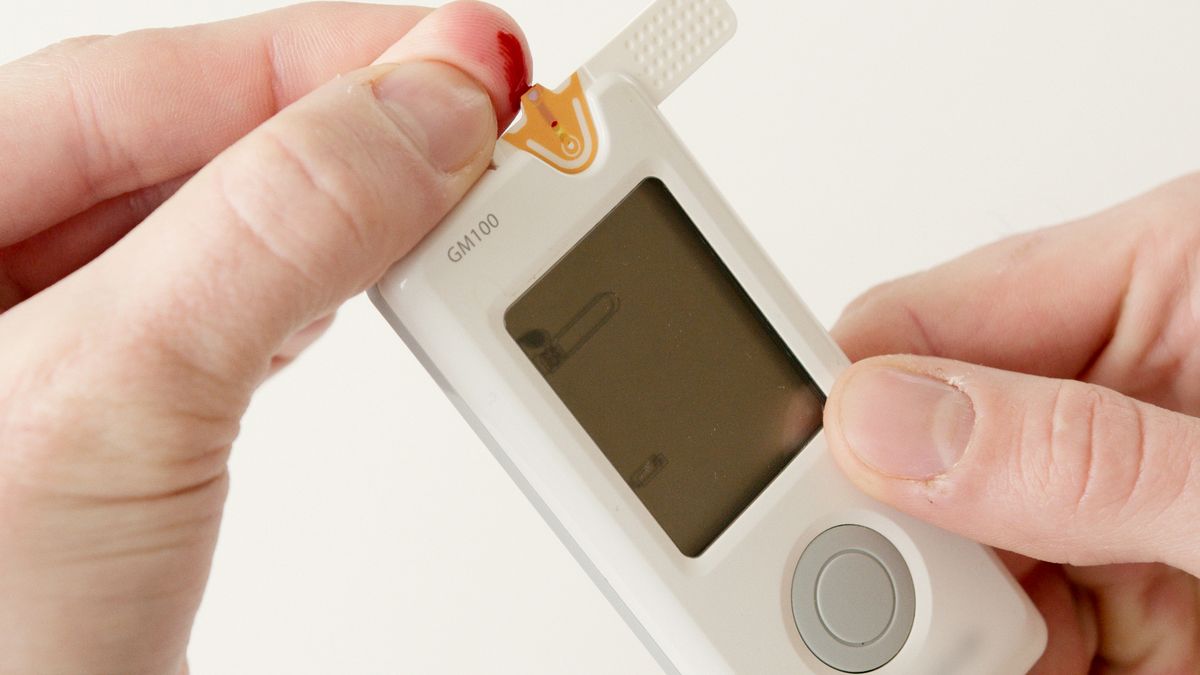
Diabetes touches almost every part of Medicare at once. The meter and test strips are durable medical equipment under Part B. Insulin can be covered by Part B or Part D depending on how you take it. The syringes are Part D. The foot exam, the eye screening, the classes and the nutrition counseling are each separate Part B benefits with their own rules about who qualifies, how often and what you pay. It is easy to assume something is covered when it is not, or to pay for something Medicare would have paid for.
This guide puts the pieces in one place: the supplies and equipment Part B covers and the limits on them, how insulin is covered and the $35 monthly cap, the prescription and supplier rules that decide whether a claim is paid, the training and nutrition services for people who already have diabetes, the screenings and the Medicare Diabetes Prevention Program for people at risk, foot and eye care, vaccines, and what Medicare does not cover. It is based on the Centers for Medicare & Medicaid Services (CMS) booklet Medicare Coverage of Diabetes Supplies, Services & Prevention Programs (July 2026) and Medicare.gov's coverage pages for each item and service.
The rules below are for Original Medicare (Part A and Part B) and Medicare drug coverage (Part D). If you have a Medicare Advantage Plan (Part C), you have Part A, Part B and usually Part D coverage through the plan, and CMS tells Advantage members to contact the plan to find out about its coverage of diabetes supplies and services. For the differences between the two paths, see Original Medicare vs. Medicare Advantage.
Coverage at a glance
The table below lists the main diabetes supplies and services and what you pay in Original Medicare. "Part B deductible" means the yearly Part B deductible, which is $283 in 2026. "20%" means 20 percent of the Medicare-approved amount, the amount Medicare sets as the payment for a covered item or service.
| Supply or service | What you pay |
|---|---|
| Blood glucose meter, test strips, lancets, control solutions (Part B) | 20% after the Part B deductible |
| Continuous glucose monitor and supplies (Part B) | 20% after the Part B deductible |
| Insulin (Part B with a covered pump, or Part D) | No more than $35 for a one-month supply of each covered insulin; no deductible |
| Syringes, needles, alcohol swabs, gauze | Part D coinsurance or copayment; Part B doesn't cover them |
| Therapeutic shoes or inserts (Part B) | 20% after the Part B deductible |
| Diabetes screenings (Part B) | Nothing if the provider accepts assignment |
| Hemoglobin A1C test ordered by your doctor | Nothing for Medicare-covered clinical lab tests |
| Diabetes self-management training (Part B) | 20% after the Part B deductible |
| Medical nutrition therapy (Part B) | Nothing if you qualify |
| Medicare Diabetes Prevention Program (Part B) | Nothing if you qualify |
| Diabetes foot exam or treatment (Part B) | 20% after the Part B deductible |
| Glaucoma screening (Part B) | 20% after the Part B deductible |
Medicare.gov adds that in a hospital outpatient setting you also pay a copayment for the foot care and glaucoma screening services. The sections below explain each line, including the conditions you must meet.
Blood glucose meters and testing supplies
A blood glucose meter checks your blood sugar at home using a small sample of blood, usually from your fingertip. Part B covers the meter and related supplies as durable medical equipment (DME), including:
- Test strips
- Lancets and lancet holders
- Control solutions, which check that the test strips and meter are accurate
Medicare.gov's page on control solutions lists who's eligible simply: you have diabetes. For DME in general, Part B covers medically necessary equipment that your doctor or other health care provider orders for use in your home.
How many strips and lancets
The amount Part B covers depends on whether you use insulin. CMS's booklet gives these amounts for each 3-month period:
| Every 3 months | Part B may cover |
|---|---|
| If you use insulin | Up to 300 test strips and 300 lancets |
| If you don't use insulin | 100 test strips and 100 lancets |
| If your doctor says more is medically necessary | More may be allowed if you meet other requirements; you may need a log of how often you test |
The last row is worth taking seriously. If your doctor wants you to test more often than the standard amount allows, CMS says Medicare will allow more strips and lancets when it is medically necessary and you meet other requirements, and that you may need to keep a record showing how often you are actually testing yourself. Keeping that log from the start avoids a scramble later.
Continuous glucose monitors
A continuous glucose monitor (CGM) tracks your blood sugar through a device attached to your body. If you have diabetes, Part B may cover a CGM and related supplies, like sensors, if your doctor or other health care provider orders them and you meet both of these conditions:
- You take insulin, or you have a history of problems with low blood sugar (hypoglycemia).
- You or your caregiver have had enough training to use a CGM as directed.
Before ordering a CGM, your provider must evaluate you and make sure you are eligible. Once you use one, CMS's booklet says you must make routine in-person or Medicare-approved telehealth visits with your doctor. After the Part B deductible, you pay 20 percent of the Medicare-approved amount if your supplier accepts assignment.
Rent or buy
Medicare covers different kinds of DME in different ways. Depending on the type of equipment, Medicare.gov explains, you may need to rent it, you may need to buy it, or you may be able to choose, and some items become your property after a certain number of rental payments. Ask the supplier how your meter, CGM or pump will be handled before you get it.
What your prescription needs to say
Medicare covers diabetes equipment and supplies only if you get a prescription from your doctor. CMS lists the information the prescription should include:
- Whether you have diabetes.
- What kind of glucose meter you need and why. If you need a special monitor because of vision problems, your doctor must explain that.
- Whether you use insulin.
- How often you should test your blood sugar.
- How many test strips and lancets you need for one month.
Two rules catch people every year. First, you need a new prescription for lancets and test strips every 12 months. Second, you must ask for refills yourself. Medicare will not pay for supplies you did not ask for, or supplies a company sent you automatically, including meters, test strips and lancets.
Where to get supplies, and why assignment matters
You can order supplies from your pharmacy or from a medical equipment supplier after your doctor gives you, or sends, the prescription. If you use a mail-order pharmacy or supplier, you must call them to place your order.
Medicare will only pay for DME from suppliers enrolled in Medicare. CMS recommends using a pharmacy or supplier that participates in Medicare and accepts assignment, which means:
- Your out-of-pocket costs may be less.
- They agree to charge you only the Medicare deductible and coinsurance, and usually wait for Medicare to pay its share before asking you to pay yours.
- They have to submit your claim directly to Medicare and can't charge you for submitting it.
If your pharmacy or supplier does not accept assignment, CMS warns that you will pay the entire charge at the time of service. Before getting any supplies, ask two questions: Do you participate in Medicare? and Do you accept assignment? Medicare.gov adds that a supplier that participates in Medicare must accept assignment, while a non-participating supplier does not have to but may choose to in your case.
To find a supplier that participates in Medicare, use Medicare.gov's supplier directory or call 1-800-MEDICARE (1-800-633-4227); TTY users can call 1-877-486-2048.
Unwanted supplies and misleading ads
If you are getting misleading advertisements, supplies sent to you automatically, or you suspect fraud related to your diabetes supplies, CMS says to call 1-800-MEDICARE. For more on spotting and reporting scams, see Medicare fraud: how to spot it and report it.
Supplies lost in a disaster
If Original Medicare already paid for equipment, like a traditional insulin pump, or supplies, like diabetes supplies, and they are damaged or lost in an emergency or disaster, CMS says that in certain cases Medicare will cover the cost to repair or replace them, and generally will also cover rentals of items while your equipment is being repaired. Call 1-800-MEDICARE for help.
Insulin: Part B or Part D
Which part of Medicare covers your insulin depends on how you take it.
- Part B covers insulin used with an external insulin pump that is not disposable and is covered under Part B's DME benefit. In that case Part B may also cover the pump itself.
- Part D plans may cover injectable insulin (with a pen or a needle); insulin used with pumps that aren't covered as DME, including disposable pumps changed after 2 to 3 days (patch pumps) and certain reusable pumps that use disposable insulin cartridges; and insulin that is inhaled.
Medicare.gov is explicit about what Part B does not cover: self-administered insulin using pens, disposable insulin pumps (patch pumps) or the insulin used with them, and insulin-related supplies like syringes, needles, alcohol swabs and gauze. CMS also notes that in certain areas of the country you may have to use specific insulin pump suppliers for Medicare to pay for a durable insulin pump.
The $35 monthly limit
The cost of a one-month supply of each Part B-covered and Part D-covered insulin is no more than $35, and you do not have to pay a deductible for your insulin. For longer fills, the limit applies to each month's supply of each covered insulin product:
| Supply of one covered insulin | Most you generally pay |
|---|---|
| One month | $35 |
| Two months | $70 |
| Three months | $105 |
A few details from CMS and Medicare.gov:
- Under Part D, the $35 limit applies to everyone who takes insulin, even if you get Extra Help. CMS's booklet adds that with Extra Help you will pay less than $35.
- Similar limits apply to insulin used in traditional insulin pumps covered under Part B.
- If you have Part B and a Medicare Supplement Insurance (Medigap) policy that pays your Part B coinsurance, your Medigap policy should cover the cost ($35 or less) for Part B insulin.
- If your Part D plan covers pumps that aren't DME, like patch pumps, the pump itself might cost more than $35.
Extra Help is the Medicare program that helps people with limited income and resources pay Part D premiums, deductibles, coinsurance and other costs; see Help paying for Medicare. For Medigap, see Medigap plans explained.
Insulin supplies
A Part D plan may cover certain supplies you use to inject insulin: alcohol swabs, gauze, needles and syringes. Part B does not cover insulin pens or these supplies. Medicare.gov puts it plainly: under Part B you will pay all of the costs for insulin-related supplies unless you have Part D.
Other diabetes drugs
Part D plans cover a variety of diabetes drugs to maintain blood sugar, and you pay a coinsurance or copayment. The Part D deductible may also apply. Each plan has its own list of covered drugs, so CMS says to check with your plan. The standard Part D deductible is $615 in 2026 and $700 in 2027, and the yearly limit on what you pay out of pocket for covered Part D drugs is $2,100 in 2026 and $2,400 in 2027. For what changes in 2027, see Medicare Part D in 2027.
CMS's booklet also notes that Medicare is negotiating with participating drug companies over the price of certain expensive brand-name Part B and Part D drugs without competition, including drugs to treat diabetes. Prices for the first 10 negotiated Part D drugs became available on January 1, 2026, and prices for the next 15 take effect on January 1, 2027. CMS says to contact your plan for details on how these prices might affect you.
Therapeutic shoes and inserts
If you have diabetes and severe diabetes-related foot disease, Part B covers one of these each year:
- One pair of depth-inlay (extra-depth) shoes and 3 pairs of inserts, or
- One pair of custom-molded shoes, including inserts, if you can't wear depth-inlay shoes because of a foot deformity, and 2 more pairs of inserts.
In certain cases Medicare may cover separate inserts or shoe modifications instead of inserts. For Medicare to pay, the doctor treating your diabetes must certify that you meet three conditions:
- You have diabetes.
- You have at least one of these in one or both feet: a deformed foot; calluses that could lead to foot ulcers; nerve damage because of diabetes with signs of problems with calluses; partial or complete foot amputation; past foot ulcers; or poor circulation.
- You are being treated under a comprehensive diabetes care plan and need therapeutic shoes or inserts because of diabetes.
A podiatrist (foot doctor) or other qualified health care provider must prescribe the shoes or inserts, and a doctor or other qualified individual, such as a pedorthist, orthotist or prosthetist, must fit and provide them. Medicare will only pay if your doctors and suppliers are enrolled in Medicare. You pay 20 percent of the Medicare-approved amount after the Part B deductible, if your supplier accepts assignment.
Diabetes self-management training
If you have been diagnosed with diabetes, Part B covers outpatient diabetes self-management training to help you learn to manage the disease. Your doctor or other qualified health care provider must give you a written order, and you must get the training from an approved individual or program as part of a plan of care your provider prepares.
How much training
- Initial training: up to 10 hours, made up of 1 hour of individual training and 9 hours of group training. You must complete it within 12 months of when you start.
- Follow-up training: up to 2 hours each calendar year after the year you got the initial training, either one-on-one or in group sessions.
Your provider may prescribe up to 10 hours of individual training instead of group sessions if you have low vision, a hearing impairment, a language or other communication difficulty, cognitive limitations, or if group sessions aren't available within 2 months of the date of the order.
What the classes cover
The first session is one-on-one, to help the instructors understand your needs. CMS lists the classroom topics, including:
- The benefits of blood sugar control and the risks of poor control
- Blood sugar testing and how diet, exercise and medication affect blood sugar
- How to prevent, recognize and treat complications
- Nutrition and how to manage your diet, and why exercise matters
- Taking your medications properly
- Foot, skin and dental care
- Adjusting emotionally to diabetes, and family involvement and support
- Using the health care system and resources in your community
After the Part B deductible, you pay 20 percent of the Medicare-approved amount. CMS notes that the training is available at many Federally Qualified Health Centers (FQHCs), which serve medically underserved people and groups, and that there you don't have to pay the Part B deductible. The Health Resources and Services Administration's Find a Health Center tool lists centers near you.
Medical nutrition therapy
Part B covers medical nutrition therapy if you have diabetes or kidney disease, or you've had a kidney transplant in the last 36 months. A doctor must refer you, and only a registered dietitian or a nutrition professional who meets certain requirements can provide it. The services can include:
- An initial nutrition and lifestyle assessment
- Individual or group nutrition therapy, including what foods to eat and how to follow an individualized diabetic meal plan
- Help managing lifestyle factors that affect your diabetes
- Follow-up visits to check on your progress
Medicare.gov describes the amounts: 3 hours in the first calendar year, which can't be carried over to the next year, and up to 2 hours of follow-up each calendar year after that. If your doctor decides a change in your medical condition requires a change in your diet, they can refer you for more hours. You pay nothing if you qualify. If you get dialysis in a dialysis facility, Medicare covers medical nutrition therapy as part of your overall dialysis care.
Medicare.gov notes that you must meet certain requirements to get both diabetes self-management training and medical nutrition therapy. Ask your doctor which you qualify for, and in what order.
Hemoglobin A1C tests
A hemoglobin A1C test measures how well your blood sugar has been controlled over the past 3 months. If you have diabetes, Part B covers the test when your doctor or other health care provider orders it, and you pay nothing for Medicare-covered clinical diagnostic laboratory tests.
Foot care
Part B covers a foot exam or treatment every 6 months by a podiatrist or other foot care specialist if you have diabetes-related lower leg nerve damage that can increase the risk of limb loss, as long as you haven't seen a foot care professional for another reason between visits. Medicare.gov states the eligibility condition in clinical terms: diabetic peripheral neuropathy and loss of protective sensation.
Depending on your exam results, the care may include treatment for foot ulcers and calluses, and toenail management. CMS says Medicare may cover more frequent visits if you've had a non-traumatic amputation of all or part of your foot, or if your feet have changed in a way that may signal serious foot disease. After the Part B deductible you pay 20 percent of the Medicare-approved amount, plus a copayment in a hospital outpatient setting.
Glaucoma screenings
Diabetes is one of the conditions that makes you eligible for a Part B glaucoma screening once every 12 months. You qualify if at least one of these applies:
- You have diabetes.
- You have a family history of glaucoma.
- You're African American and 50 or older.
- You're Hispanic and 65 or older.
An eye doctor who is legally allowed to do glaucoma tests in your state must do or supervise the screening. After the Part B deductible you pay 20 percent of the Medicare-approved amount, plus a copayment in a hospital outpatient setting. Note what this is not: Original Medicare doesn't cover eyeglasses or exams for glasses, except after cataract surgery.
If you don't have diabetes yet: screenings
Part B covers diabetes screening blood tests if your doctor or other health care provider determines you're at risk. You qualify if you have any one of these:
- High blood pressure
- A history of abnormal cholesterol and triglyceride levels
- Obesity, defined by CMS as a body mass index (BMI) of 30 or higher
- Impaired glucose tolerance
- A history of high blood sugar
You also qualify if 2 or more of these apply:
- You're 65 or older.
- You're overweight, defined as a BMI between 25 and 29.9.
- You have a family history of diabetes (parents or siblings).
- You have a history of gestational diabetes, or gave birth to a baby weighing more than 9 pounds.
Because being 65 or older is one of the factors on the second list, anyone 65 or older who has one more factor from that list meets the two-factor rule. If you qualify, you can get up to 2 screenings each year, within 12 months of your most recent screening. After the first test your doctor decides whether you need a second. Covered tests include fasting glucose tests, hemoglobin A1C tests and other Medicare-approved glucose tests. You pay nothing if your provider accepts assignment.
The Medicare Diabetes Prevention Program
If a screening shows prediabetes, Part B covers the Medicare Diabetes Prevention Program, a health behavior change program to help you prevent type 2 diabetes. It is free if you qualify.
How the program works
- 16 core sessions, one a week, within a 6-month period, led by a specially trained coach.
- 6 monthly follow-up sessions after the first 6 months, to help you keep the habits.
- Training on realistic, lasting changes to diet and exercise, tips for getting more exercise, and strategies to control your weight.
- Support from people with similar goals, if you take part in person or through live online sessions.
Through December 31, 2029, CMS says you can take part in person, virtually, or both, and virtual participants can choose live or self-paced sessions. Medicare.gov's program page says there is no limit to the number of times you can take part.
Who qualifies
You must have Part B (or a Medicare Advantage Plan), be at risk for type 2 diabetes, and meet all of these conditions:
| Requirement | What counts |
|---|---|
| One test result within 12 months before your first session | Hemoglobin A1C of 5.7% to 6.4%; or fasting plasma glucose of 110–125 mg/dL; or 2-hour plasma glucose of 140–199 mg/dL (oral glucose tolerance test) |
| Body mass index | 25 or more (23 or more if you're Asian) |
| No prior diagnosis | Never diagnosed with type 1 or type 2 diabetes or End-Stage Renal Disease (ESRD) |
Programs are run by approved Medicare Diabetes Prevention Program suppliers, which can be traditional health care providers or organizations like community centers or faith-based groups. In a Medicare Advantage Plan you may have to use an in-network supplier. Medicare.gov's program page has a search to find one near you or online.
Vaccines
CMS points out that people with diabetes have a higher risk of complications from certain diseases. Part B covers flu, COVID-19, hepatitis B and pneumococcal vaccines, and you pay nothing if your doctor or provider accepts assignment. Part D covers all adult vaccines recommended by the Advisory Committee on Immunization Practices (ACIP) that Part B doesn't cover, including shingles (zoster), RSV, MMR and Tdap, and you pay nothing for those. Ask your doctor which vaccines are right for you.
Your yearly preventive visits
Two Part B visits are good moments to raise diabetes risk, supplies and referrals:
- "Welcome to Medicare" preventive visit, once, within the first 12 months you have Part B. It reviews your medical and social history and covers education and counseling about preventive services and referrals.
- Yearly "Wellness" visit, once every 12 months after you've had Part B longer than 12 months. The provider reviews your history and prescriptions, takes routine measurements, gives you a written plan of the screenings and vaccines you need, and does a cognitive assessment.
Neither is a physical exam. You pay nothing if your provider accepts assignment and the Part B deductible doesn't apply, but you may pay coinsurance, and the deductible may apply, if the provider does other tests or services during the visit that Medicare doesn't cover under that preventive benefit.
A new option: the ACCESS model
CMS's July 2026 booklet describes a new voluntary model for people in Original Medicare, starting July 5, 2026, called ACCESS (Advancing Chronic Care with Effective, Scalable Solutions). It connects your doctor with participating providers to help manage chronic conditions such as diabetes, and CMS says it may help improve access to technology-supported care you can use at home, and might make care more affordable. CMS directs readers to Medicare.gov/ACCESS for details.
What Medicare doesn't cover
CMS lists these as not covered by Original Medicare or Part D:
- Eyeglasses and exams for glasses, except after cataract surgery
- Orthopedic shoes, meaning shoes for people whose feet are impaired but intact (different from the therapeutic shoes above)
- Cosmetic surgery
- Routine physical exams
Add to those the items described earlier: under Part B, insulin pens, syringes, needles, swabs and gauze; and any supplies you didn't ask for. For the wider list, see What Medicare doesn't cover.
If a claim is denied
Your Medicare Summary Notice lists each claim and what Medicare paid. If a supply or service you believe is covered was denied, check the reason first, then compare it with the prescription and supplier rules above. You can appeal by the date on the notice. See Medicare appeals for the steps and deadlines. Your State Health Insurance Assistance Program (SHIP) offers free counseling: visit shiphelp.org or call 1-800-860-8747.
A short checklist
- Ask your doctor for a prescription that states your diagnosis, whether you use insulin, how often to test and how many strips and lancets you need each month.
- Put a reminder on the calendar: the prescription for strips and lancets must be renewed every 12 months.
- Order refills yourself, and refuse supplies that arrive without your request.
- Use a pharmacy or supplier that participates in Medicare and accepts assignment; ask before you order.
- If you test more than the standard amount, keep a testing log.
- Check how your insulin is covered: pump insulin under Part B, pens and injections under Part D, and $35 a month at most for each covered insulin.
- Make sure you have Part D, or other drug coverage, for syringes, needles and other diabetes drugs.
- Book the foot exam every 6 months if you qualify, and the glaucoma screening every 12 months.
- Ask for a written order for self-management training, and a referral for medical nutrition therapy.
- If you don't have diabetes, ask whether your risk factors qualify you for screening and, with prediabetes, the free prevention program.
Medicare's diabetes coverage is broad, but almost every benefit has a condition attached: a prescription, a referral, a frequency or a supplier rule. Getting those details right at the start is usually what separates a paid claim from a bill.
Check our work
Every figure on this page was read from these official documents. Follow the links and compare.
- Medicare Coverage of Diabetes Supplies, Services & Prevention Programs (CMS Product No. 11022, July 2026)Centers for Medicare & Medicaid Services. Read on November 15, 2026.
- InsulinCenters for Medicare & Medicaid Services. Read on November 15, 2026.
- Blood sugar test stripsCenters for Medicare & Medicaid Services. Read on November 15, 2026.
- Blood sugar monitorsCenters for Medicare & Medicaid Services. Read on November 15, 2026.
- Continuous glucose monitorsCenters for Medicare & Medicaid Services. Read on November 15, 2026.
- Therapeutic shoes & insertsCenters for Medicare & Medicaid Services. Read on November 15, 2026.
- Diabetes screeningsCenters for Medicare & Medicaid Services. Read on November 15, 2026.
- Diabetes self-management trainingCenters for Medicare & Medicaid Services. Read on November 15, 2026.
- Medical nutrition therapy servicesCenters for Medicare & Medicaid Services. Read on November 15, 2026.
- Medicare Diabetes Prevention ProgramCenters for Medicare & Medicaid Services. Read on November 15, 2026.
- Foot care (for diabetes)Centers for Medicare & Medicaid Services. Read on November 15, 2026.
- Glaucoma screeningsCenters for Medicare & Medicaid Services. Read on November 15, 2026.
- Medicare Summary Notice (MSN)Centers for Medicare & Medicaid Services. Read on November 15, 2026.
- Appeals in Original MedicareCenters for Medicare & Medicaid Services. Read on November 15, 2026.
- CostsMedicare.gov. Read on November 12, 2026.
- Announcement of Calendar Year 2027 Medicare Advantage Capitation Rates and Part C and Part D Payment PoliciesCenters for Medicare & Medicaid Services. Read on November 12, 2026.
To cite this page: Retiree Toolkit. "Medicare and diabetes: supplies, insulin, CGMs, training and screenings." Updated November 15, 2026. https://www.retireetoolkit.com/guides/medicare-diabetes-coverage